
Birch
BIRCH – DUBAI
Some restaurants you research before you visit. And then there are the ones where you arrive knowing almost nothing, only that a name has been travelling fast throughout the dining circuit. Birch was the second kind.
I had heard Chef Arslan Berdiev's name whispered fast and furiously before I ever set foot inside his restaurant, Birch, in the Ritz-Carlton DIFC. I knew he was from Turkmenistan and that he had already built something iconic in St Petersburg. But beyond that, I walked in almost blank, which is perhaps the best way to walk into a restaurant like this.
I came in one evening with Marguerite, a good friend I hadn't seen in what felt like far too long. We had no idea of the mind-blowing evening that was about to unfold.
Our first course arrived. Not on a plate, but in a small, round box, the kind that might hold an amuse-bouche. I reached for it and stopped in my tracks. On the lid of the box was a photograph of me and Marguerite that was taken nearly ten years before. How Chef Arslan found it, I will never know, and to be honest, I'm not sure I want to. What I do know is that in that single gesture, that small, extraordinary act of attention, he told us everything we needed to know about what kind of evening this was going to be. Not a performance. Not a spectacle. Something a lot more rare: hospitality as a genuine expression of curiosity about the people sitting at his tables.
What followed was a spectacular evening filled with intrigue and surprise, executed with the most disarming humility.
It was right then and there that I knew I had to come back with my camera crew, and a lot more questions. This is how it unfolded.
When I walked into Birch to film this spotlight, the experience was something else entirely. The first visit had been about the evening, the anticipation, and of course, the food. This time I had space to stop, look, and almost marvel.
THE INTERIORS
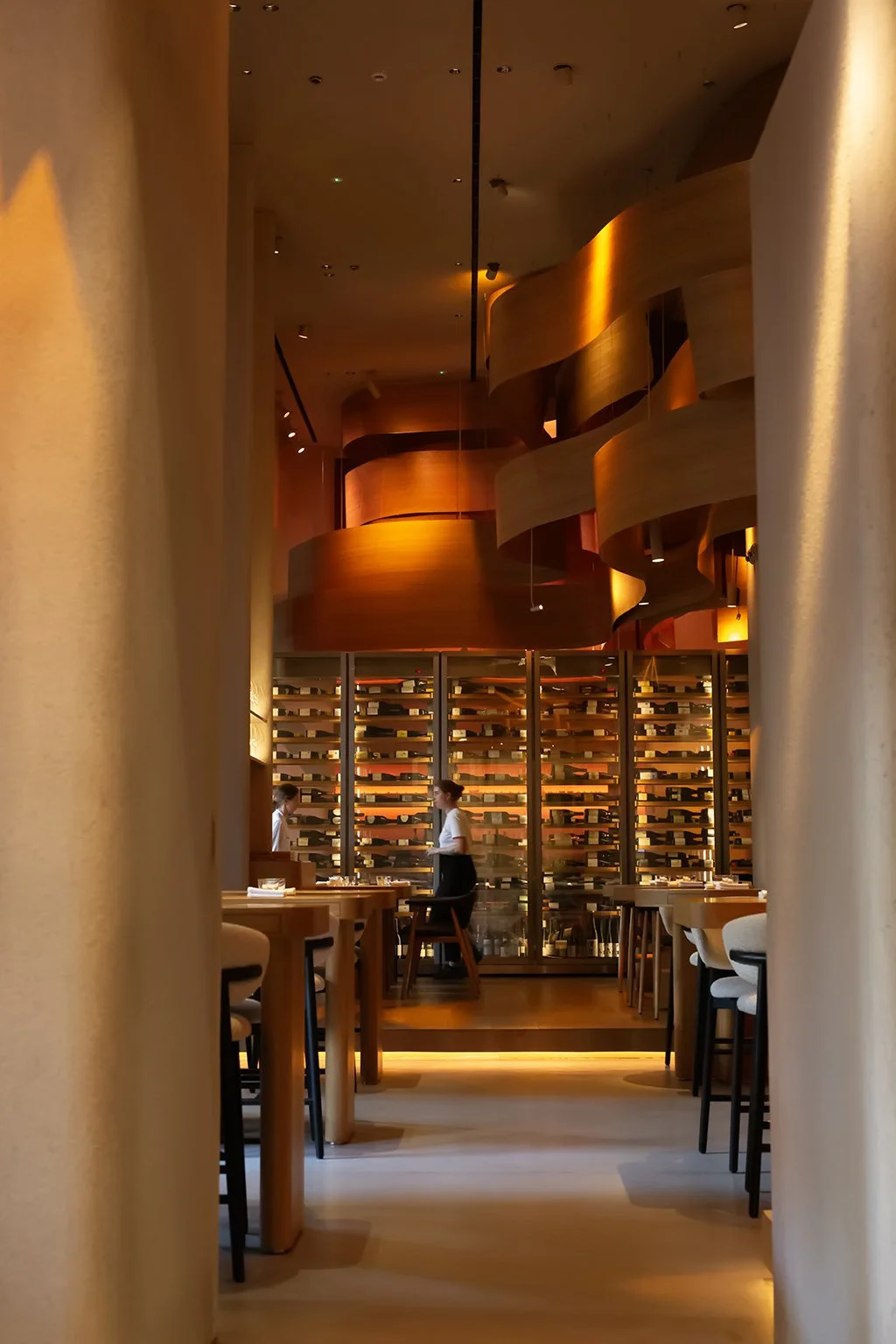
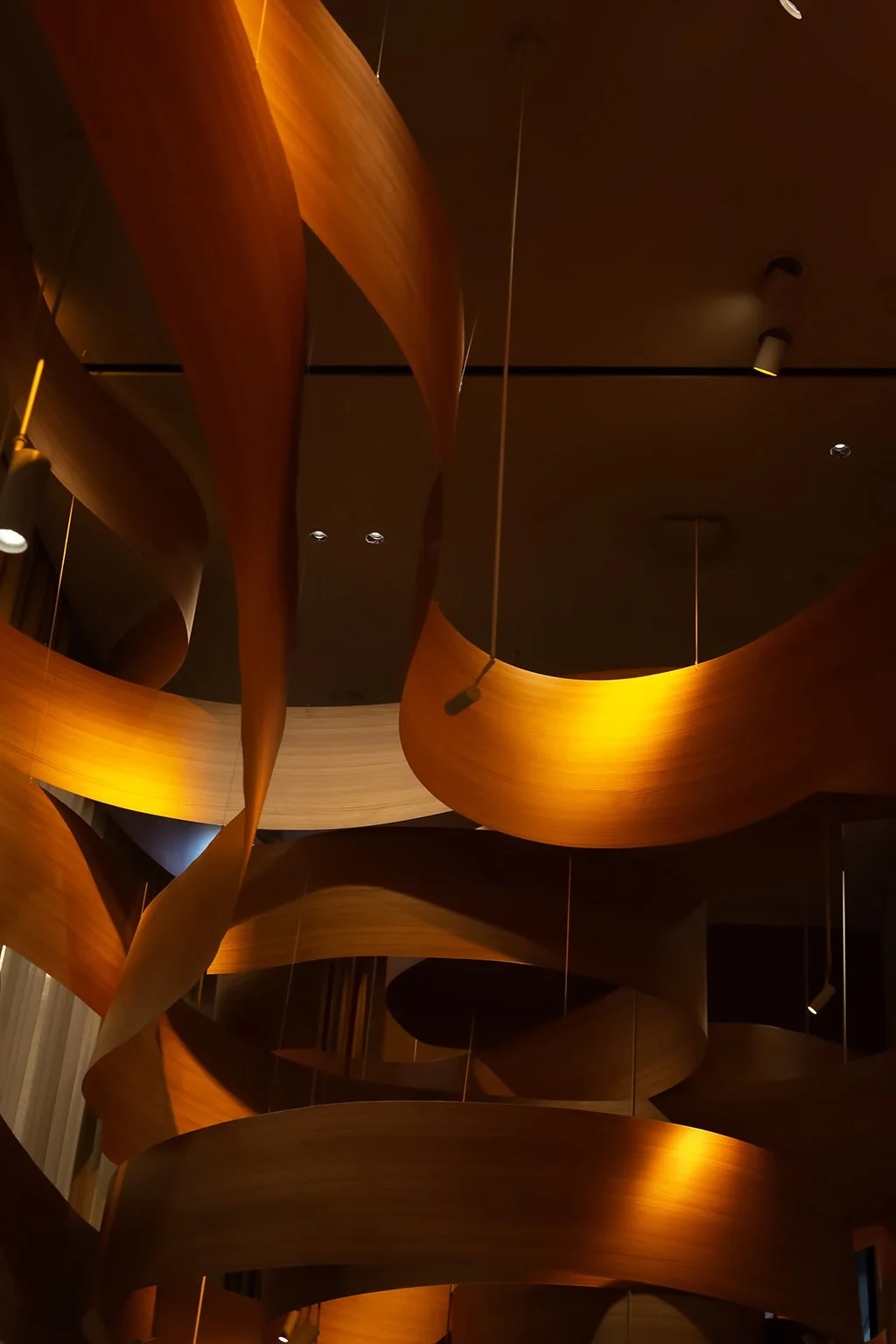
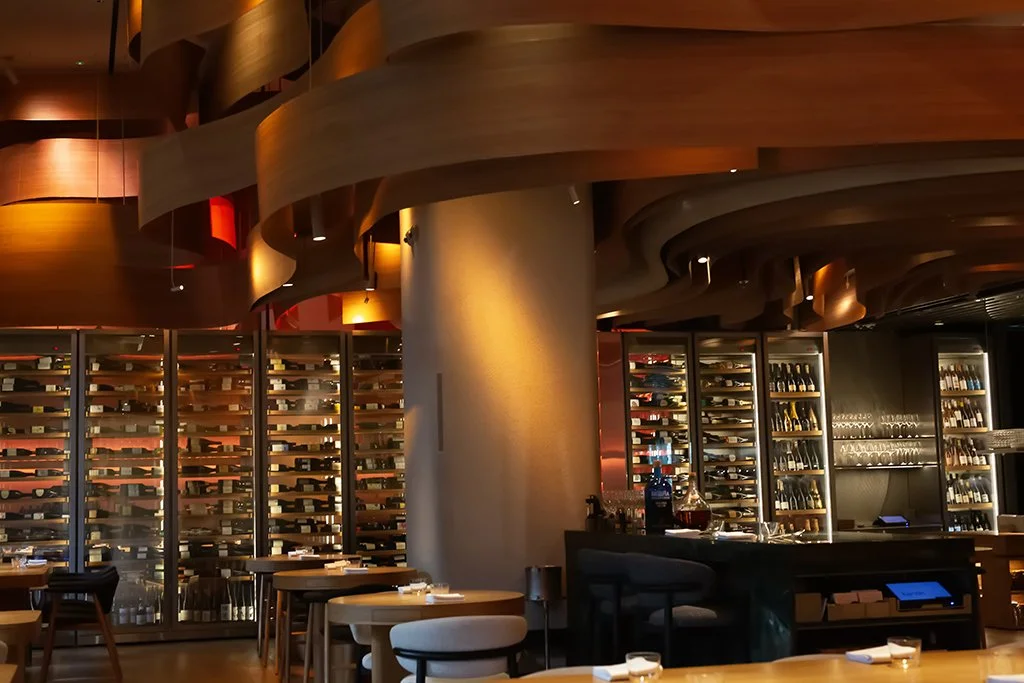
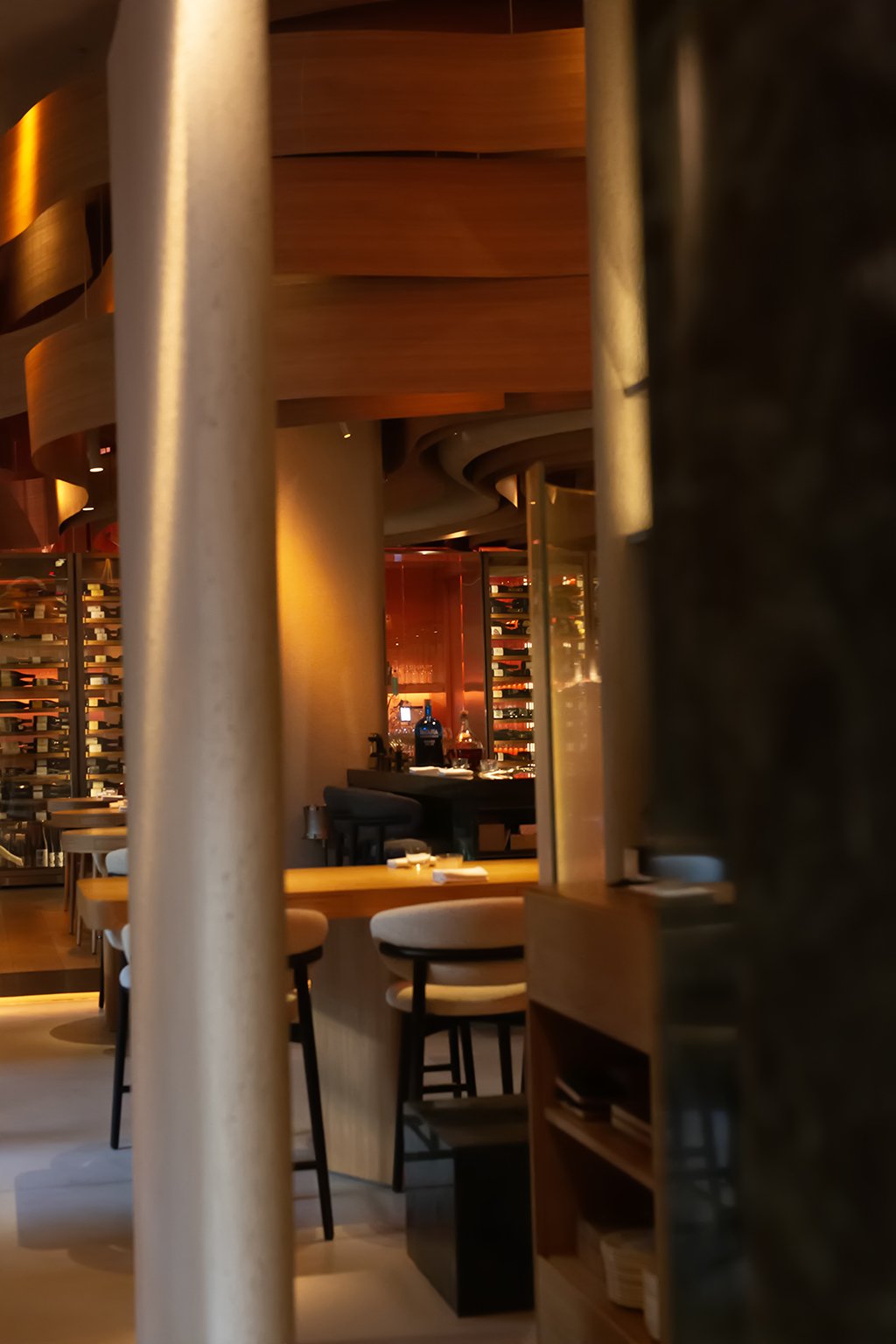
The interiors, I learned, are rooted in the birch tree itself. Looking at the expansive, smooth, papery waves lining the walls, the visual echo of growth rings inside a birch trunk, it was suddenly, perfectly obvious. It is one of those design decisions that reveals itself slowly, with an "aha" moment at some random point, and is all the more satisfying for it.
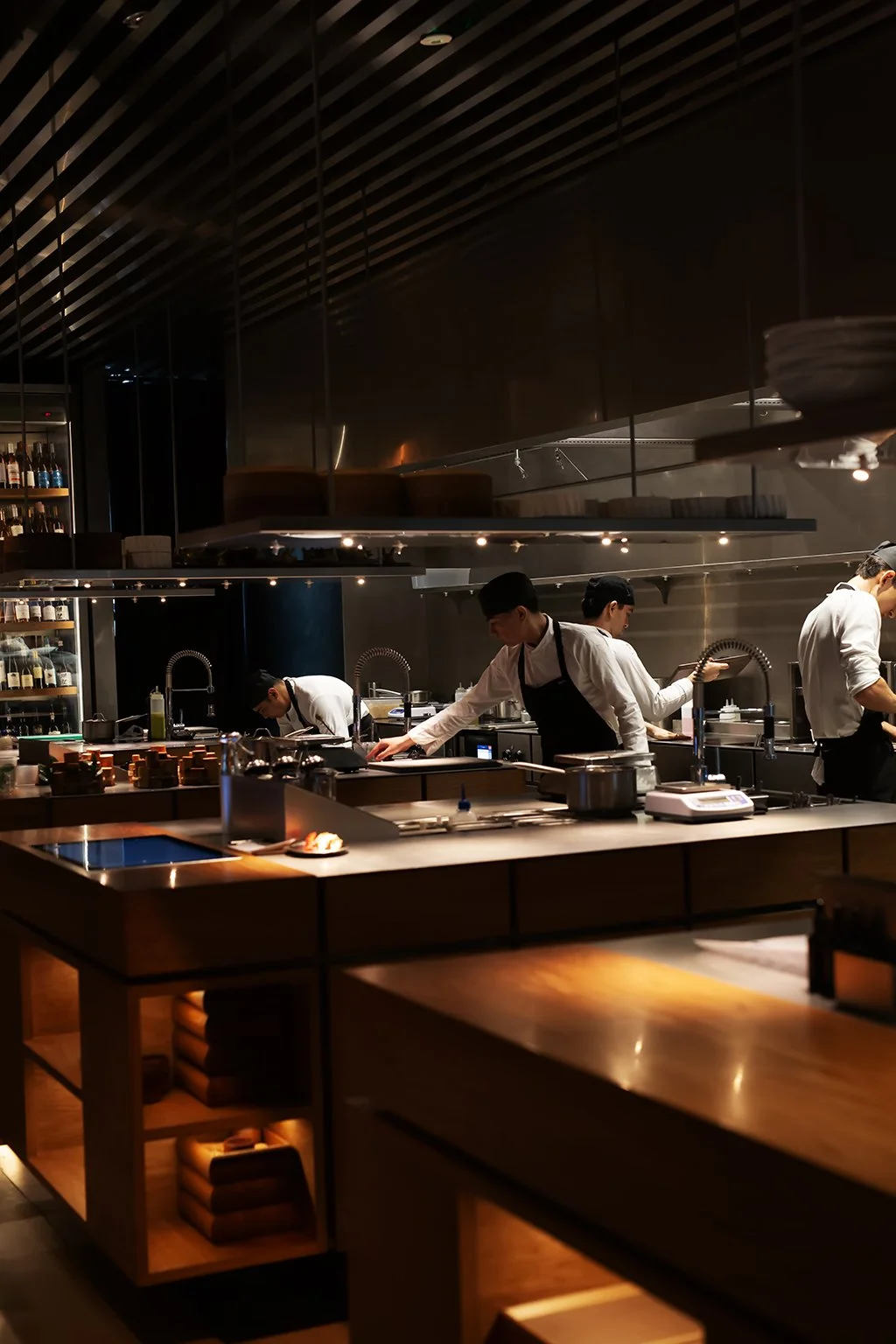
Mikhail Sidorov, Birch's general manager, took us through the restaurant, past that open kitchen, now familiar but no less impressive, where the sous-chefs were already at their stations, awaiting our arrival. Then we were led into the private dining room and a dedicated space behind it, the laboratory, a space where Chef Arslan and his team come to think, to experiment, and to play with ingredients and ideas that haven't yet found their place on the menu, pushing the boundaries of what a dish can be and where it can come from.

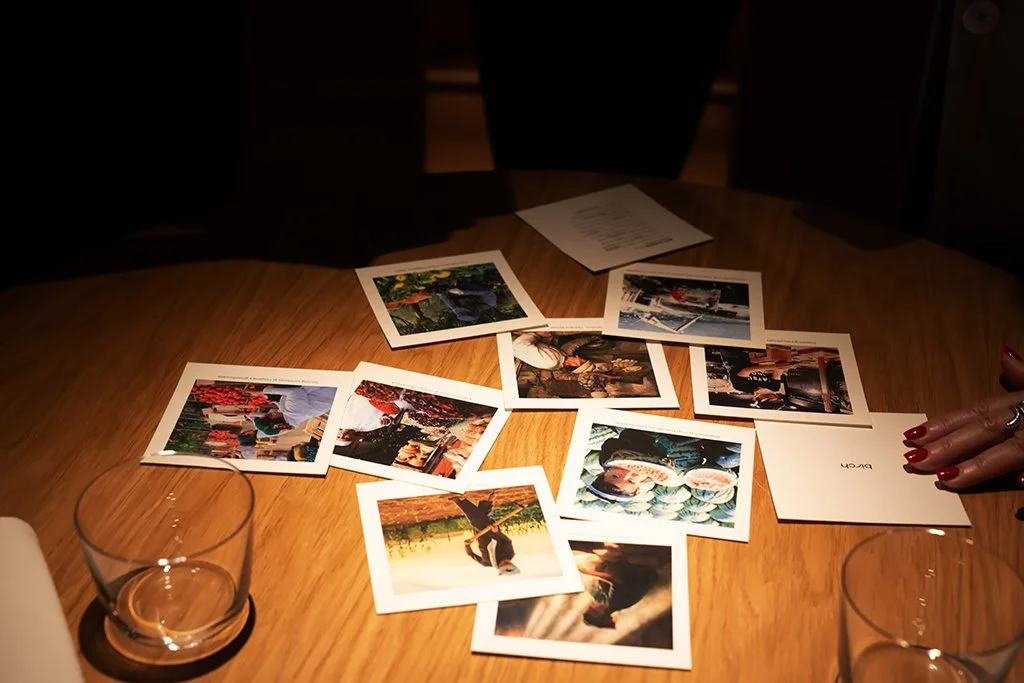
On the table, a series of polaroids. Rural Turkmenistan, markets, landscapes, the textures and colors of everyday life in a country most of the world knows little about. Laid out without ceremony on the table of one of Dubai's most considered dining rooms, they created a contrast that stopped me in my tracks. The outrageous precision of fine dining on one side, juxtaposed with the humble simplicity of home on the other. Polar opposites, and yet, sitting in that room with those images, more connected than we could ever imagine.
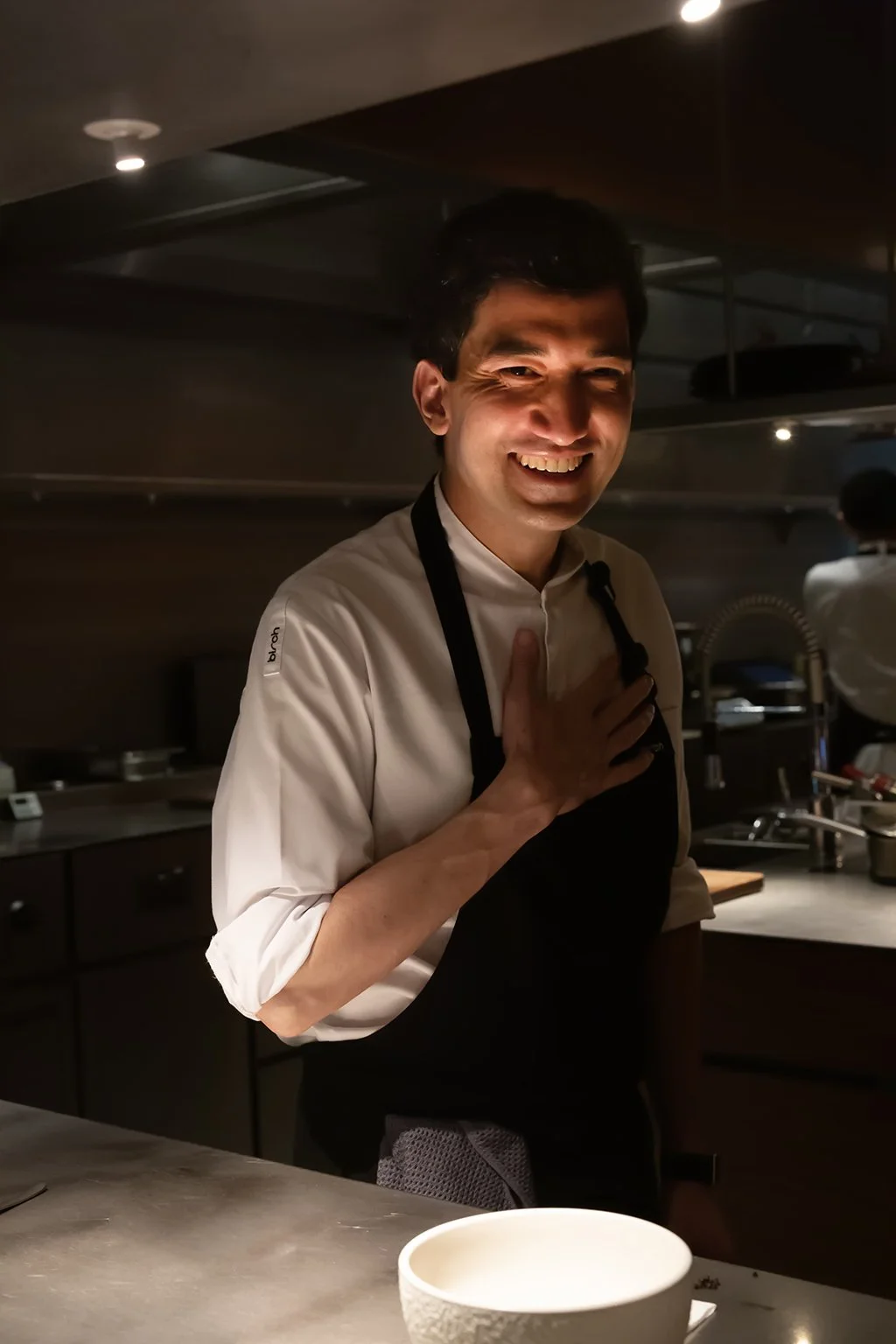
Looking at those photographs, I found myself wondering how someone arrives at this point, at the helm of one of Dubai's most talked-about kitchens, having started so very far from here. So I asked him.
The Chef
Chef Arslan's path to success is a fascinating one. At the tender age of seventeen, he was enlisted in the army. When the new recruits arrived, he tells me, everyone was assigned to a position, some to offices, while Chef Arslan was sent to the kitchen. "Listen, I can't cook," he told them. "You don't have a choice," they replied. "We decide."
What followed, he says, became the foundation of everything he creates today. While in the army kitchen with nothing but the simplest, lowest-grade ingredients, the kind his family back home would have fed to the chickens, Chef found himself searching for a way to make something delicious. "I had a big motivation to cook something good from that product," he tells me. "Like my mother, she cooks really simple things. No foie gras, no truffle. But it's delicious. So from then on, we try to put our soul into every dish."
After his time in the army, he moved to Russia and, within his second day in the country, was already working in a fish restaurant. From there, his path took him through some of the most demanding kitchens in Italy, Spain and across Asia, yet remarkably, Chef Arslan has had no formal culinary training. Everything he knows, he learned on the line, restaurant by restaurant, country by country.
And yet, when I ask what inspires him most, his answer isn't Italy or Spain. It's home: Turkmenistan, and the wider region of Central Asia: Kazakhstan, Uzbekistan, the food of his childhood.
With that story still settling in, we made our way to the open kitchen, where it unfolds like a small stage, each station its own act: pastry, cold appetizers, hot appetizers, fish and meat, and finally, pasta and soup.
Dried beetroot tartare with goat's cheese mousse and caramelised pecans
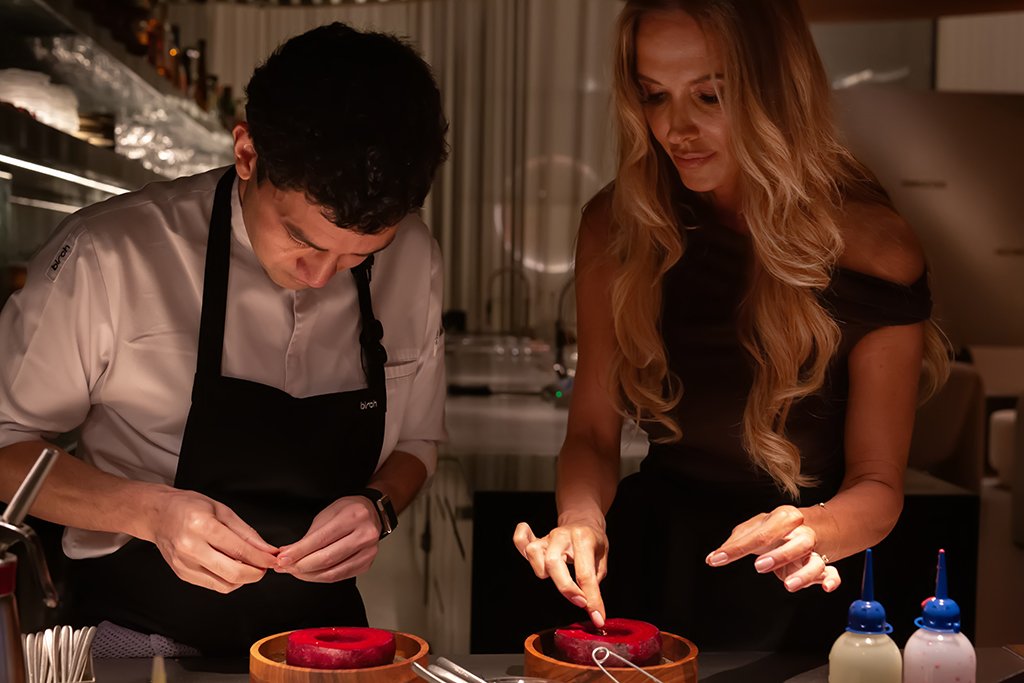
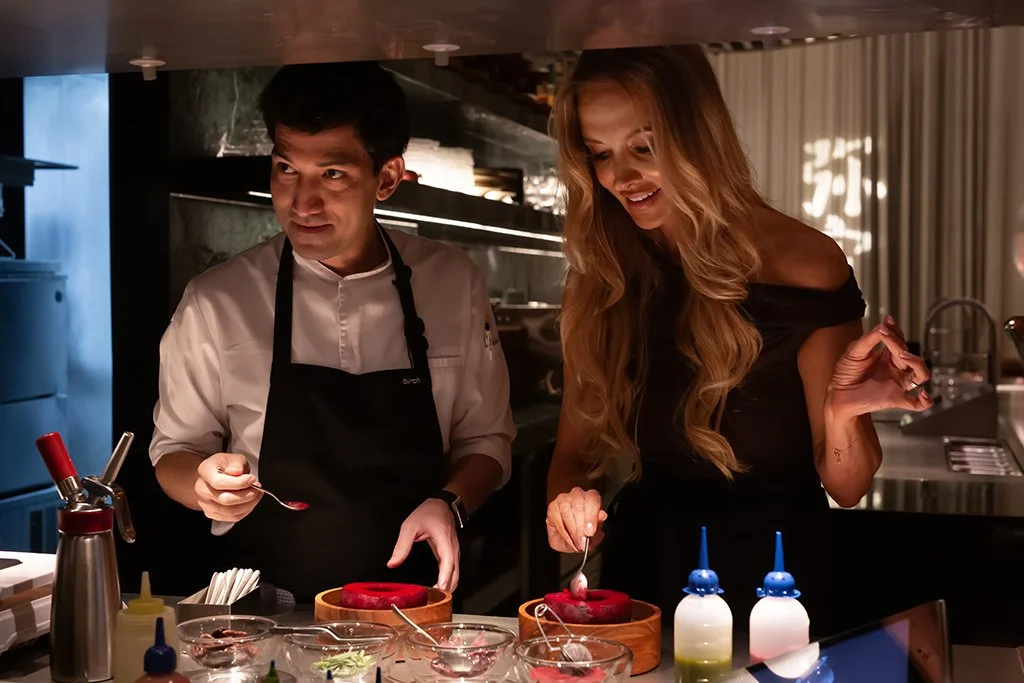
We started with the cold appetizer station, where I was presented with a dish that stopped me before I had even tasted it. Dried beetroot, sourced locally from Al Ain, peeled and carved with a small hat to close it, served as a tartare alongside a goat's cheese mousse and caramelised pecans.
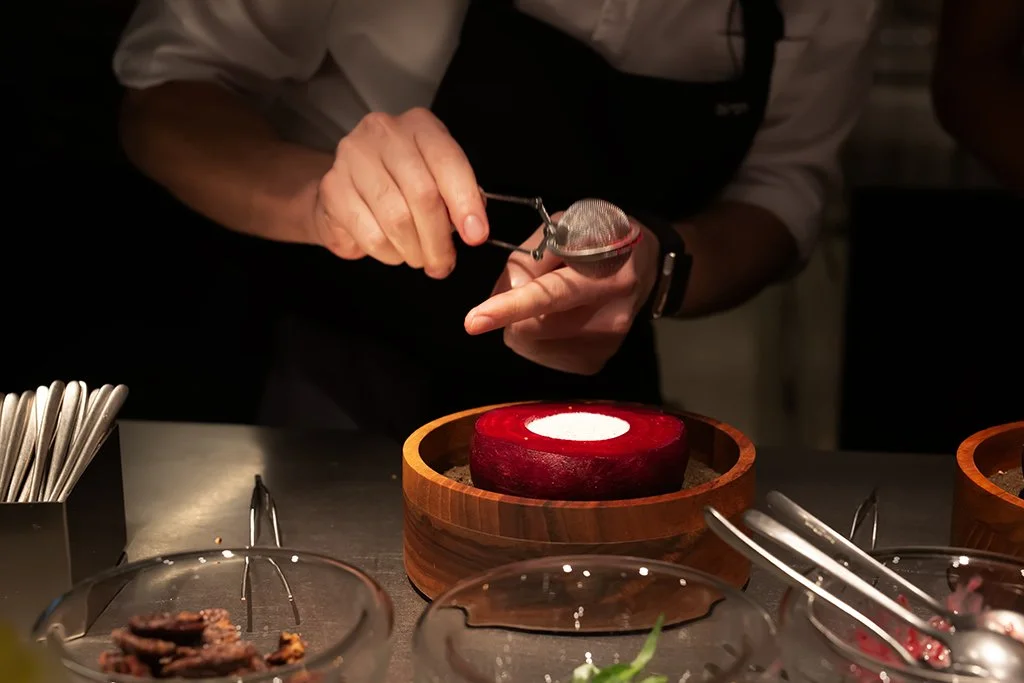
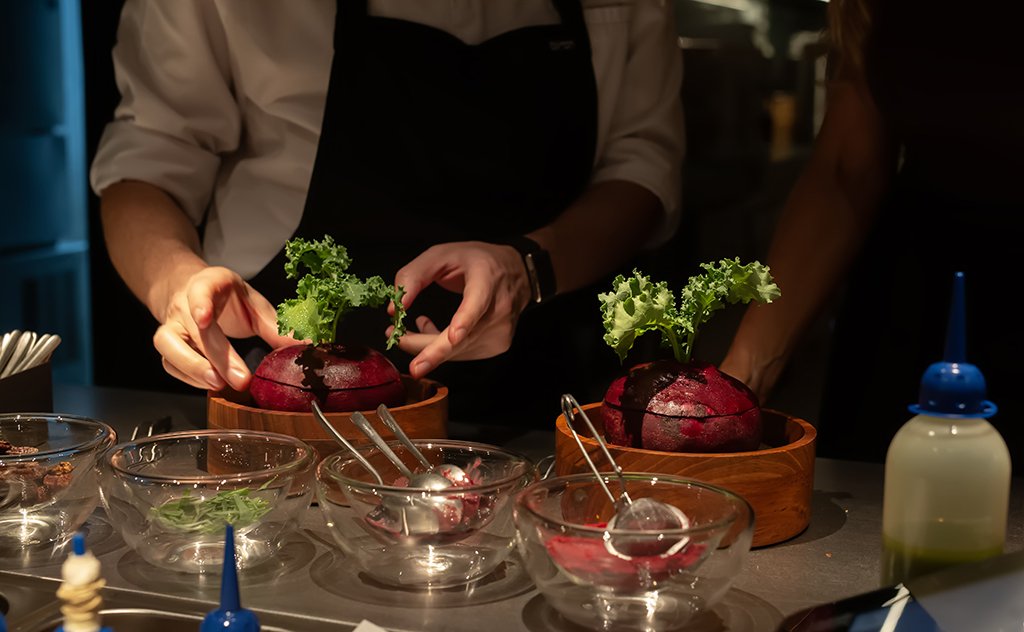
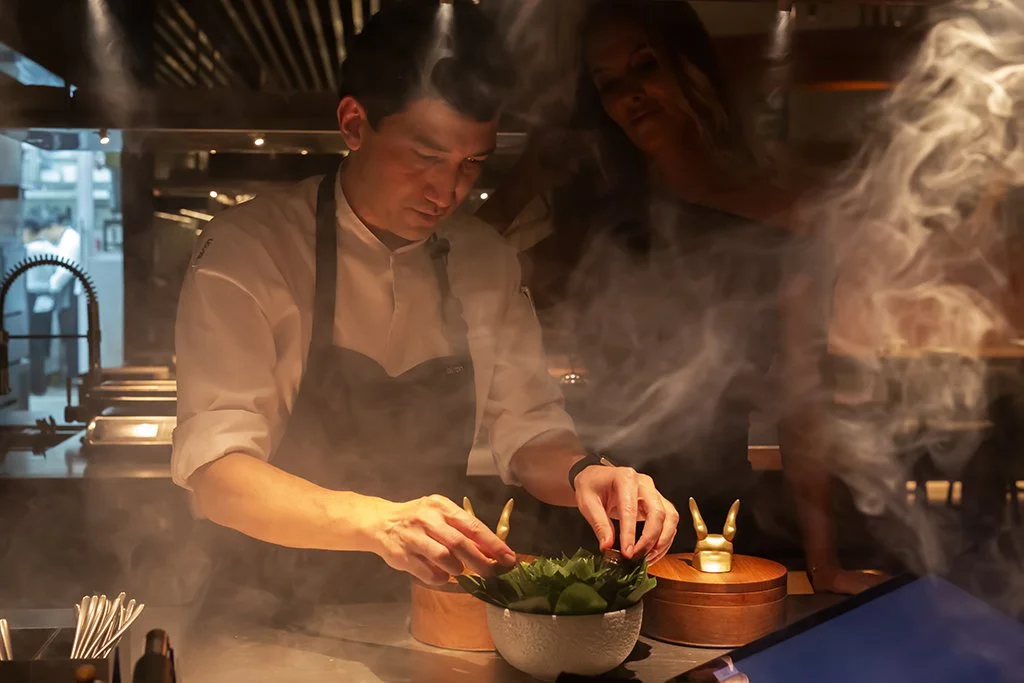
Chef walked me through every component, placing the tarragon oil, building the beetroot mousse, piping the warm goat's cheese into the hollowed-out beetroot itself. The result was earthy, refined, and a spectacular visual piece. Edible proof that beauty lies in simplicity, and that excellence sneaks its way into every detail.
Quail croquette with anchovy sauce
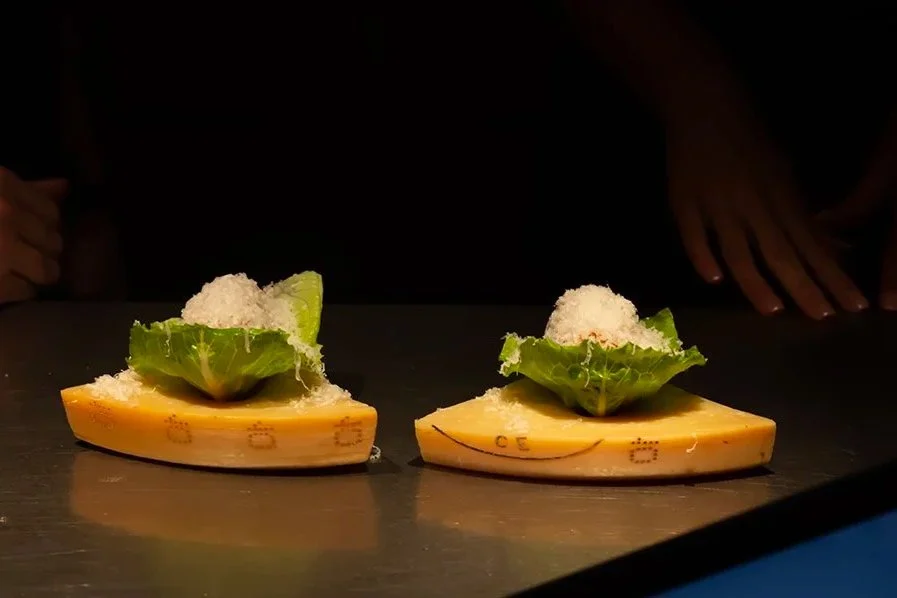
We moved on to the appetizer station, where Chef placed a triangle of raw milk Parmigiano Reggiano in front of me, with a small divot carved into the centre. Chef explained that this would act as the plate. Birch uses only raw milk cheese, he told me, before revealing what it was about to hold: a quail croquette with anchovy sauce, in a playful tribute to the Caesar salad. The sauce, made from anchovy paste and Parmigiano, was layered over baby gem lettuce, and he let me taste every stage before I tried my hand at plating.
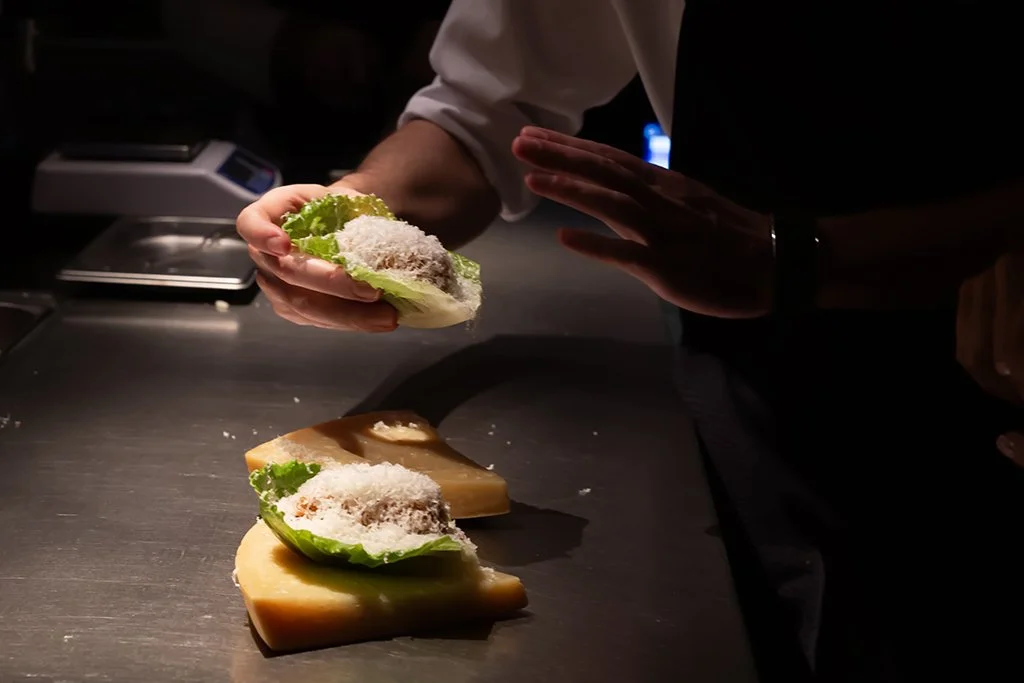
A fresh tomato from Uzbekistan went in next (the best tomatoes in the world, I would soon discover), then the croquette itself, finished with a rainfall of Parmigiano, the cheese present in every single component. Nestled like a taco, the dish was gone in two or three bites: crisp on the outside, the quail rich without being heavy, the anchovy sauce giving it a savoury backbone.
72-hour slow-cooked veal ribs
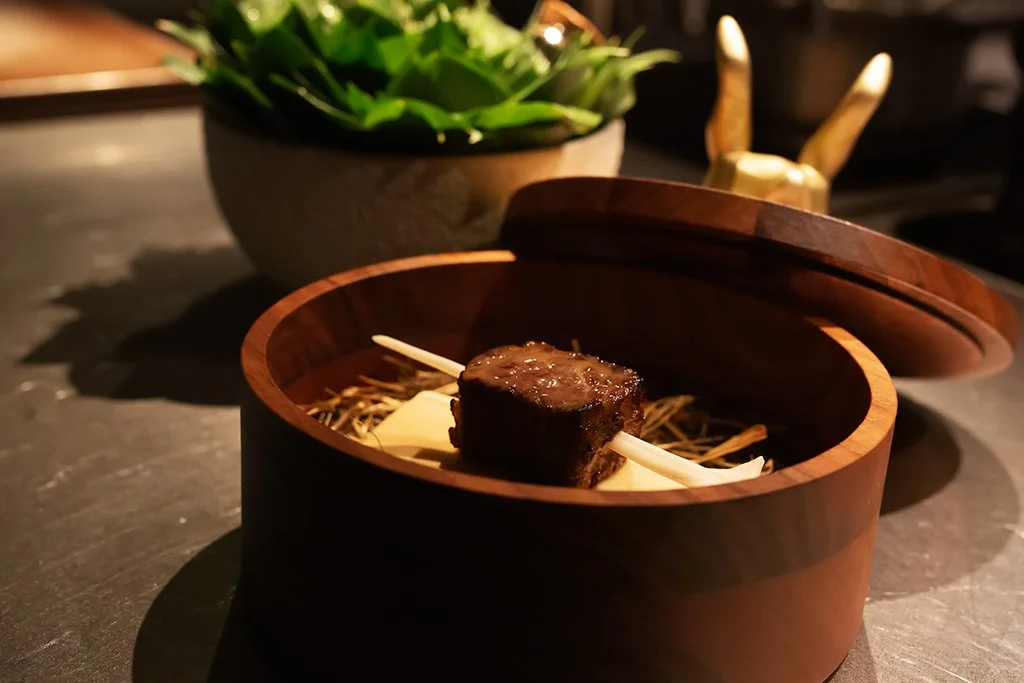
At the meat station, 72-hour slow-cooked veal ribs, the meat sourced from Russia, yielded a deep, fire-infused flavour. The dish is rooted in Chef's home of Turkmenistan; the technique, he told me, comes from his father, a hunter, and the smoky methods used to cook meat over an open flame.
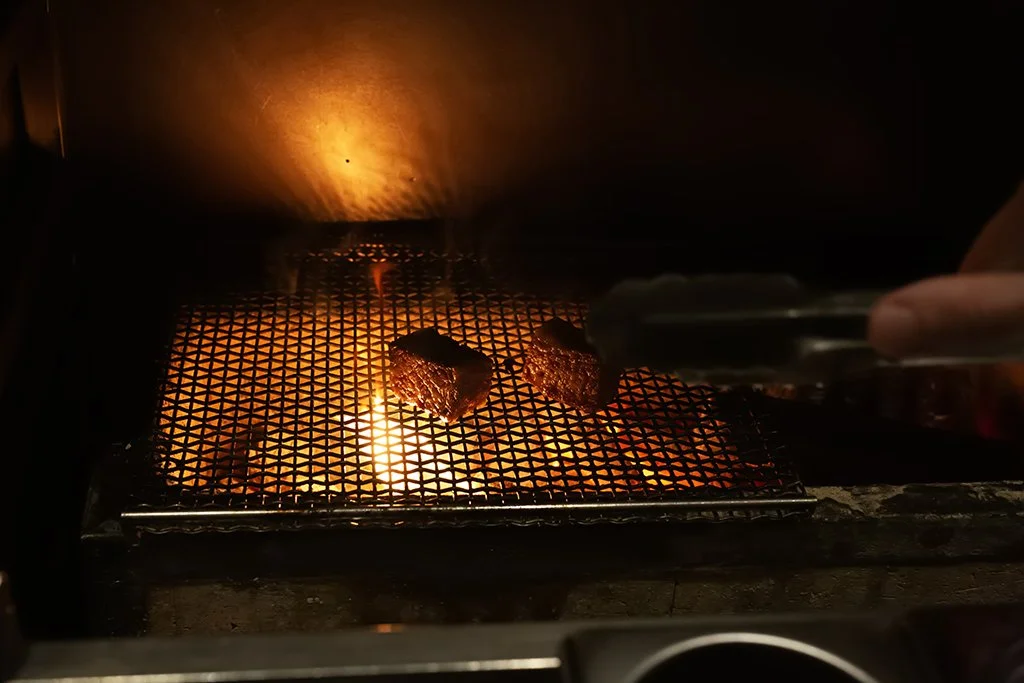
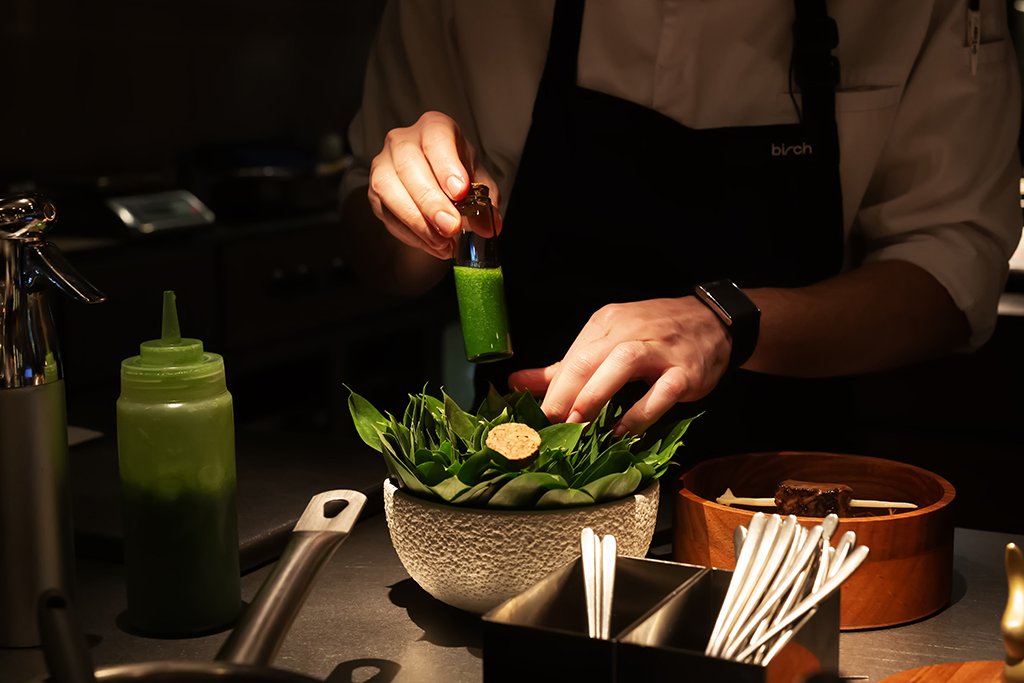
Alongside the veal sat what Chef called a "liquid salad," green fermented tomato, green olives and herbs, served in a test tube. He insisted I try the fermented tomato first: three months in the making, and unlike anything I had ever tasted. The longer it ferments, the better the result, he said. We plated together in a wooden box, laying the meat on the bone, glazing it with the reduction from the sous vide, the liquid salad alongside.
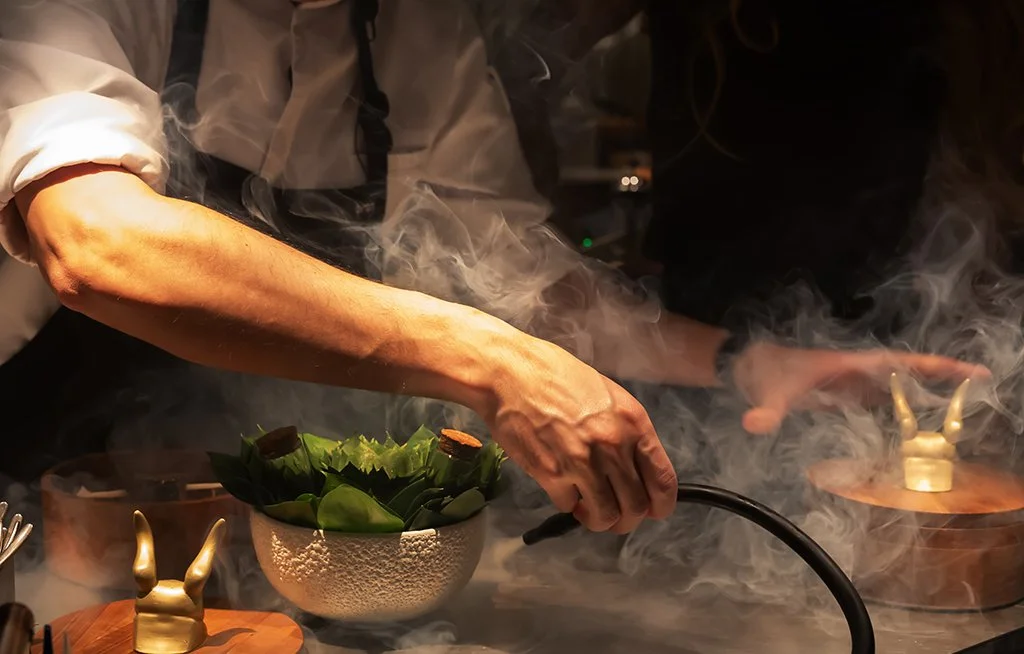
Chef smoked the meat, which added intrigue to the already visual feast. Eat the rib first, he instructed, then chase it with the salad. The smoke machine made its appearance, a touch of drama, of course, as the veal, cooked seventy-two hours and finished over charcoal, arrived smoky and crisp at the edges. One bite of meat, then the salad. Wow, wow, wow.
Wild mushroom ramen with truffle fondue brioche
And finally at the pasta and soup station, a wild mushroom ramen with shiitake, porcini and eringi cut into a fine julienne to form the "noodles" themselves. It was reimagined comfort food at its finest.
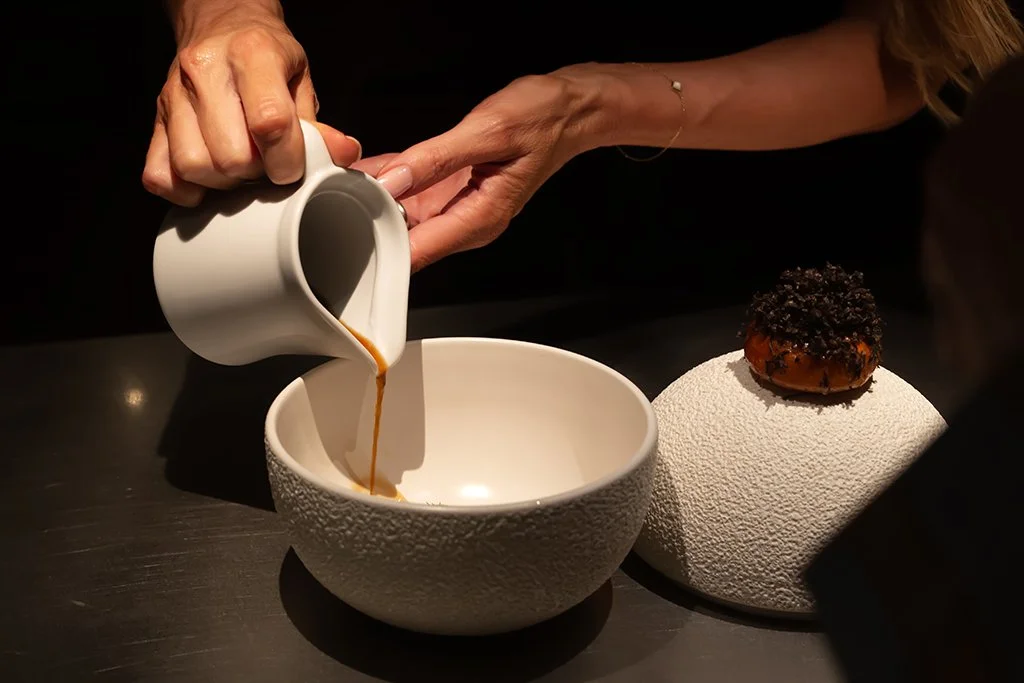
The bowl arrived built in stages. Rounds of vibrant sweet potato confit were set in first, with Chef gently placing a single drop of spring onion oil between each one. A sphere of brie followed, and then, one frond at a time, fresh dill, tying everything together with a quiet, herbal lift. Only then did the broth go in, poured at the table, deep and earthy, releasing the layered flavour of the mushrooms as it settled around everything else.
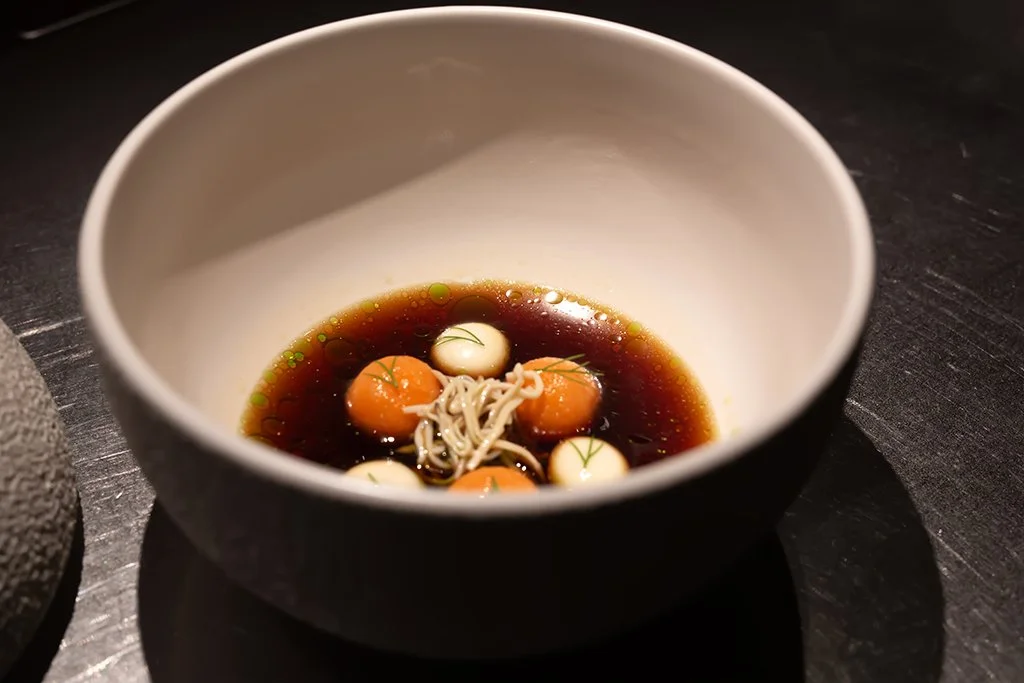
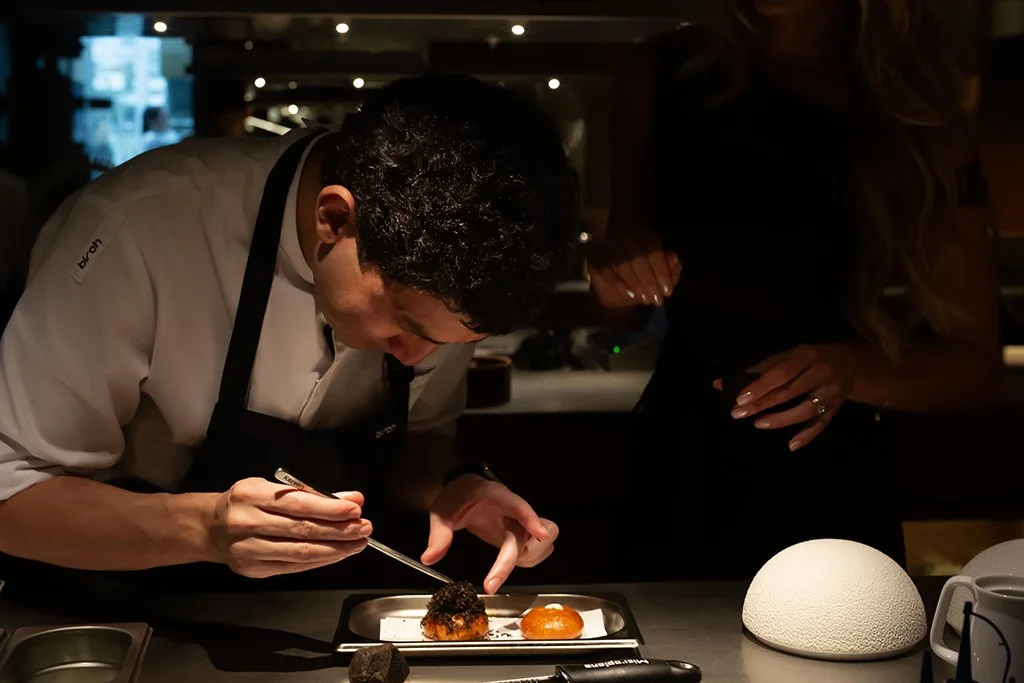
Alongside it sat a warm, fried brioche, filled with brie fondue and finished with shaved truffle. Chef handed it to me to fill myself, piping the warm brie straight into the bun before I took my first bite.
A spoonful of broth. A bite of the brioche. Back and forth. The dish was robust, rich and impossibly delicate. A perfect finish to a day of mastery.
Before we said goodbye, I asked Chef Arslan one last question: of everything he has ever cooked, in any kitchen, in any country, what is his favourite dish? His answer didn't take long.
Fitçi, he tells me, a traditional Turkmen pie with thin dough wrapped around a juicy meat filling. In its humble traditions, these pies were baked in clay ovens, the steady, even heat producing a tender, slow-cooked filling beneath crisp, golden pastry. At Birch, the team has recreated that effect using modern techniques, but the pies are still made entirely by hand, and in honour of where the dish, and the chef, began. Of everything on a menu built from techniques and ingredients gathered across the world, the dish closest to his heart is the simplest of them all, and the one that takes him home.
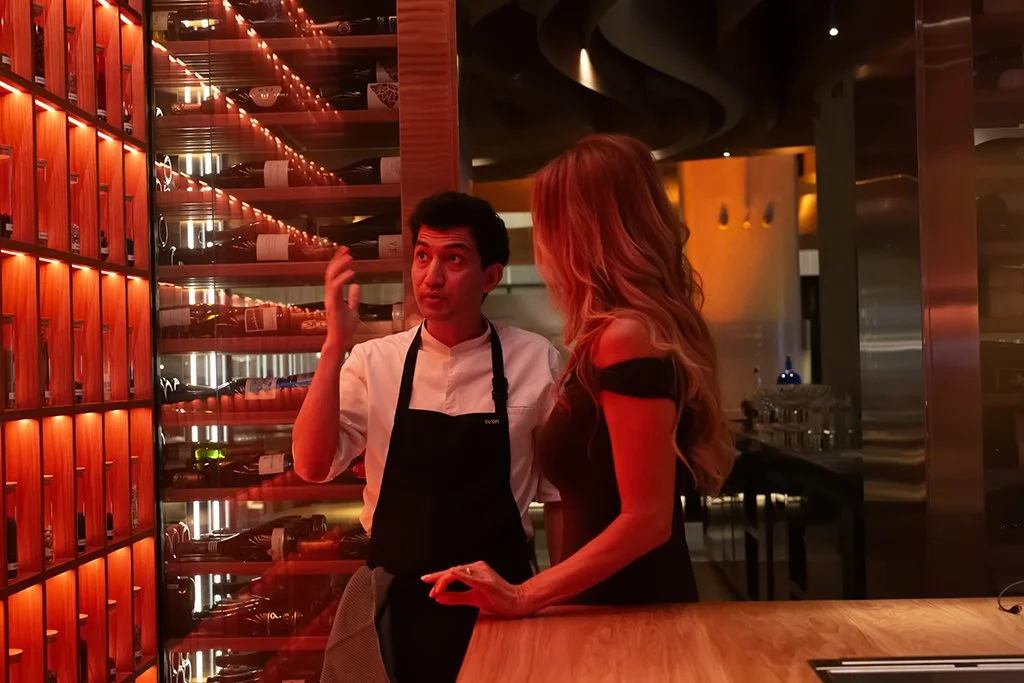
As I left the restaurant, I passed through the lounge again, a little bit slower this time. It was only then that I noticed the words written across the walls: Memories. Values. Inspiration. Roots. Soul. A few simple words, easy to miss if you're moving too fast. But spend an evening at Birch and you realise these are far from decorative. They're an entire philosophy, written out in plain sight. And that's exactly what struck me most by the end of the day: the sheer calm that comes from a team who have nothing to prove but the love of their craft. Chef Arslan didn't cook at me. He cooked with me, walking me through every stage, guiding me patiently as I tried my hand at plating things far more delicate than anything that usually graces my kitchen.
I truly felt like a guest in his home, which, in many ways, is exactly what Birch is. A home built from memories of Turkmenistan, from the values instilled by an army kitchen and a mother who could make magic from almost nothing, from the roots he has never let go of no matter how many countries or kitchens he has passed through, and from a soul that, quite simply, refuses to cut corners.
When I look back to that very first night, the small round box with the photograph of two old friends, found and placed there by a man none of us had ever met. At the time, it felt like a singular moment of serendipity, the kind of thing you assume must be reserved for someone special or some iconic occasion. But it wasn't. It was simply Chef Arslan doing what he always does. Paying attention, putting his soul into it, while making something ordinary extraordinary.
Memories. Values. Inspiration. Roots. Soul. Not only words on a wall, but an entire experience, plated and served, one exquisite course at a time.
Shot on location at Birch – Ritz Carlton DIFC
Special Thanks to Chef Arslan Berdiev and the team at Birch
Words – Lidija Abu Ghazaleh
Photography – Esma Gok
Glam – Maria Doyle
Assistant – Belinda Lee
A Lidija’s Kitchen FZ LLC Production
© 2026, All Rights Reserved